2026-09-07 ·
Talking With Family About Hoarding Cleanup in Newport Beach Homes
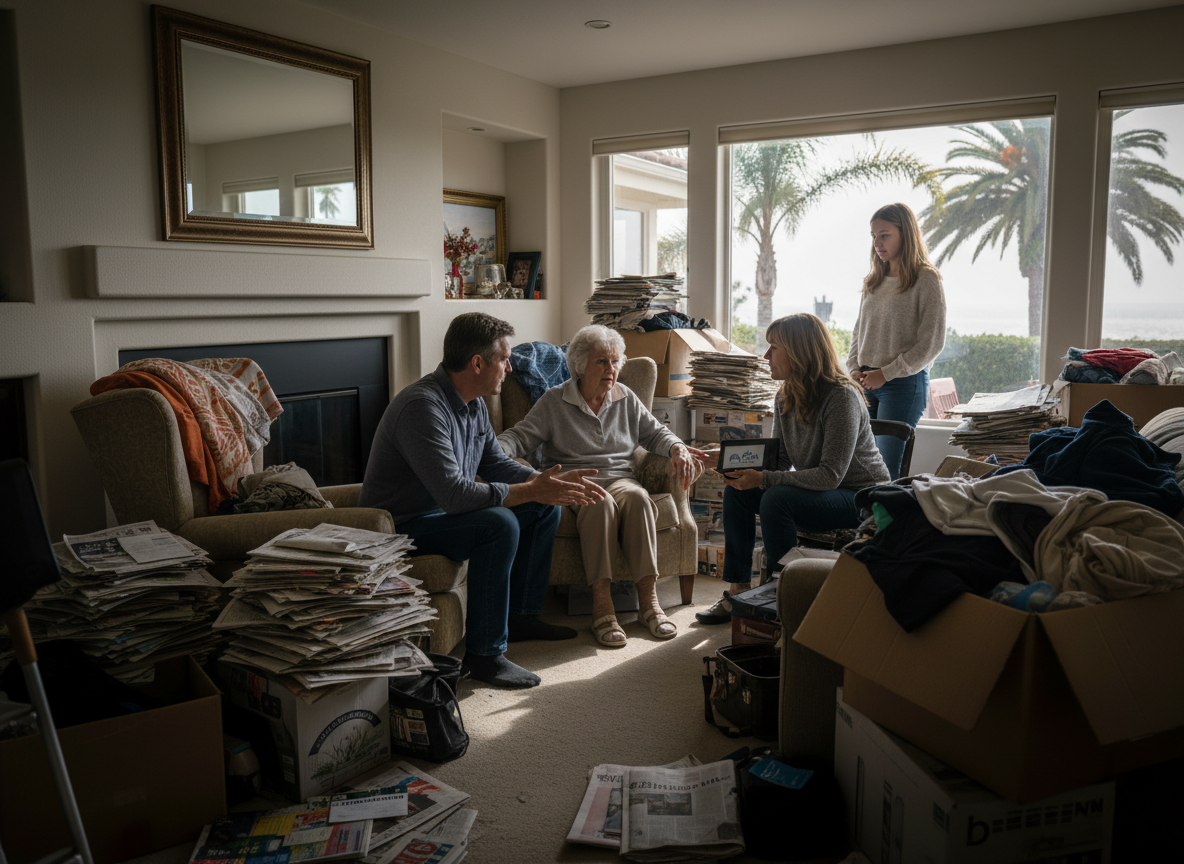
Talking with family about hoarding cleanup in a Newport Beach home works best when the first conversation lasts about 20–30 minutes, focuses on 1 immediate safety concern, and ends with 1 manageable next step. Do not begin by ordering a whole-house purge or arguing about whether possessions have value. Instead, protect the person’s control over decisions while addressing blocked exits, unusable plumbing, spoiled food, unstable piles, or other conditions that cannot safely wait. Effective hoarding cleanup is usually a sequence of decisions—not a single dramatic cleanout day.
Begin With Safety, Not Shame
Choose a calm time when no one is rushing, and limit the first discussion to the conditions that directly affect daily life. Statements such as “I’m worried that this doorway cannot open fully” are more useful than labels such as “This house is a disaster.” Ask permission before photographing rooms, moving containers, or inviting other relatives into the conversation. In Newport Beach, privacy may be especially important in close-set homes and condominiums around Balboa Peninsula, Balboa Island, and Corona del Mar, where carrying material through shared halls, narrow side yards, or visible alleys can draw unwanted attention.
Keep the opening goals concrete:
- Restore a clear route to 2 usable exits.
- Make the kitchen sink, toilet, and shower safely accessible.
- Remove spoiled food, leaking containers, and obvious trip hazards.
- Set aside medication, identification, keys, and financial records.
A family member is more likely to cooperate when the plan preserves dignity and does not treat every possession as trash. A structured Hoarding Cleanup plan can separate safety work from the slower process of sorting sentimental or potentially valuable property.
Know Which Conditions Cannot Wait
Some concerns require action before the family settles every disagreement. Exit doors should open without shifting piles, hallways should provide a stable walking route, and access to electrical panels, heaters, and cooking appliances should not be obstructed. Materials stacked against lamps, extension cords, or heat-producing equipment can turn ordinary household use into a fire concern. The risk can become more pressing during Southern California’s dry periods and strong fall winds, when families should review guidance on reducing fire hazards in hoarded homes.
Watch for water damage as well. Coastal air around Newport Beach can slow the drying of damp paper, fabric, and cardboard, while a hidden plumbing leak can spread beneath tightly packed contents before anyone notices staining or odor. Homes near Newport Harbor and Upper Newport Bay may also collect salt-laden dust on windows, metal objects, and stored patio contents. If there are needles, human waste, animal waste, decomposing material, or extensive contamination, stop ordinary sorting and treat the affected space as a health-risk area rather than a standard clutter project.
Use Categories That Reduce Conflict
Families often stall when every object becomes a separate argument. A better approach is to agree on categories before opening boxes or moving furniture. Use clearly marked areas or containers for Keep, Family Review, Donate, Sell, Recycle, and Dispose. Add a confidential-paper category so bank statements, medical records, tax documents, and mail are not mixed into general debris. Set a decision deadline for the Family Review group; otherwise, uncertain items simply create a second accumulation elsewhere.
Avoid promising that all contents can be sold. Furniture that is clean and accessible may deserve evaluation, but stained upholstery, incomplete household goods, common paperbacks, and items exposed to moisture often have little resale value. An estate sales clear out also differs from a hoarding project because an estate may involve probate instructions, competing heirs, and property that cannot be released yet. Families handling an inherited Newport Beach residence should review estate cleanouts after probate in Orange County before disposing of records, jewelry, artwork, collections, or titled property. When estate authority is clear, an organized Estate Clean Out can follow the agreed inventory and distribution
Plan Around the Newport Beach Property
The building and access route shape the cleanup. Balboa Peninsula properties may have tight garages, narrow lots, limited curb space, and busy streets that complicate staging. Balboa Island homes can require careful planning around compact streets and pedestrian traffic, while hillside properties in Newport Coast may involve stairs, sloped driveways, and longer carrying distances. Condominiums near Fashion Island or Corona del Mar can add elevators, shared corridors, parking restrictions, and building rules. A walkthrough should cover the route from every work area to the loading point before anything heavy is moved.
Discuss these practical questions with the family:
- Which entrance can be used without blocking neighbors or common areas?
- Are stairs, railings, and floors stable enough for repeated carrying?
- Where can items be sorted without obstructing an exit?
- Does the property have an association, building manager, or scheduled access requirement?
- Which materials need special handling rather than ordinary disposal?
Orange County disposal rules also affect appliances, electronics, paint, batteries, and other restricted materials. Review large-cleanout waste disposal rules before arranging containers or assuming everything can go into one load.
Agree on a Written, Phased Cleanup Plan
End the family discussion with a written scope rather than a vague promise to “start cleaning.” Phase 1 should address immediate hazards and recover essential rooms. Phase 2 can sort documents, valuables, donations, and sale candidates. Phase 3 can remove remaining clutter, clean accessible surfaces, and identify repairs that were hidden by contents. For a large home, divide work by room or zone so progress is visible and the resident is not overwhelmed by simultaneous decisions.
Assign authority in writing: identify who can approve disposal, who handles family keepsakes, and who pauses work when an item is disputed. If the resident still occupies the home, establish a protected area for possessions that will remain untouched. If relatives disagree, do not use the cleanup crew as the referee; resolve ownership and estate authority first.
The goal is a safer, functional Newport Beach home and a process the family can sustain. Orange County Hoarding Cleanup is available Mon–Fri, 8am–6pm, and Sat, 9am–2pm to discuss the property’s access, sorting needs, and removal scope. A useful first call should produce clear priorities and an upfront quote—not pressure to discard everything at once.