2026-09-07 ·
Local Waste Disposal Rules for Large Cleanouts in Orange County
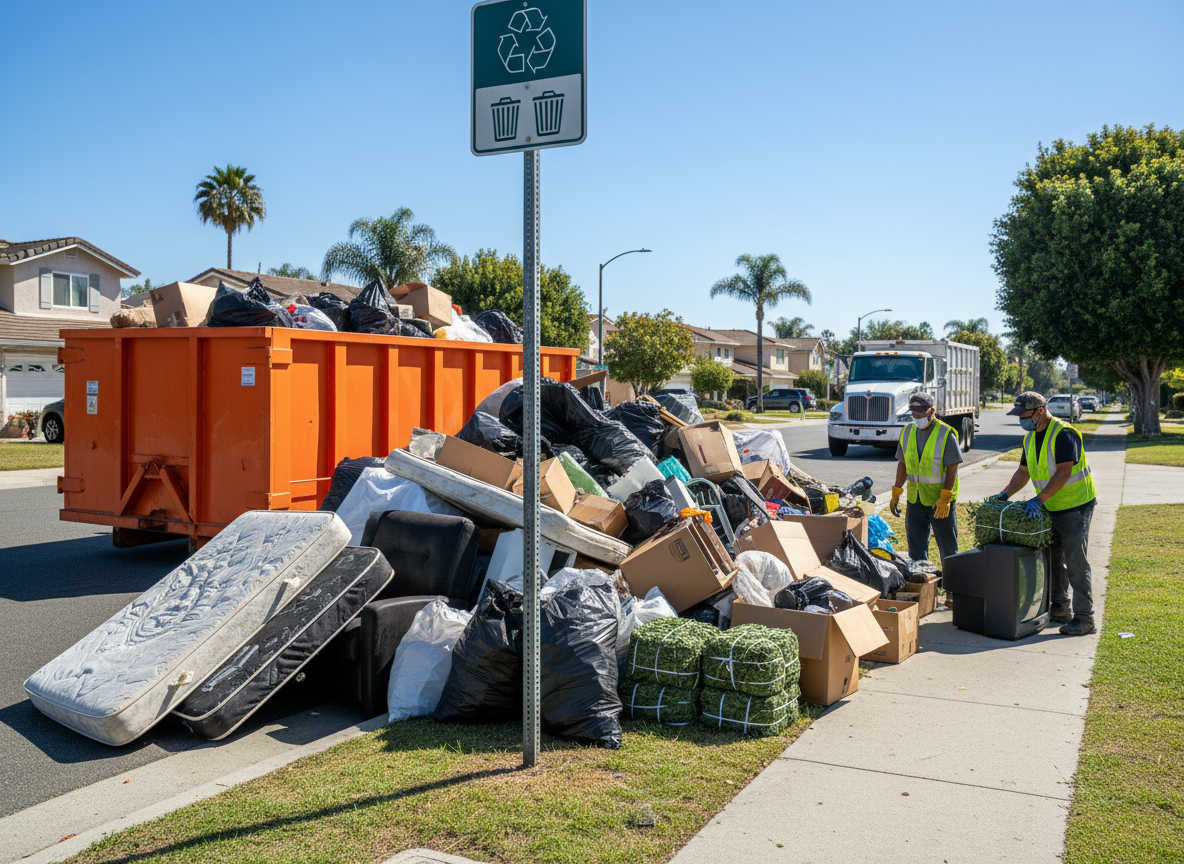
For a large cleanout in Orange County, ordinary household trash can generally go through an approved hauler or disposal facility, but hazardous waste, electronics, batteries, certain appliances and some construction debris must be separated. Bulky-item pickup limits, dumpster placement rules and approved hauling providers vary by city, so a project in Santa Ana may follow different procedures than one in Anaheim, Huntington Beach or Fullerton. The safest approach is to identify regulated materials before loading, confirm the property’s city or unincorporated status, and check the applicable public works or waste-hauler instructions.
Start With the Rules for the Property’s City
Orange County does not operate as a single curbside collection system. Cities contract with different waste companies, while unincorporated communities may use separate service arrangements. That affects how residents schedule bulky-item collection, how many items can be set out, whether a temporary dumpster requires approval and which company may legally provide a container.
Before an estate sales clear out or whole-house cleanup, confirm the service provider listed on the property’s trash bill. Ask about:
- Bulky-item appointments for furniture, mattresses and large household goods
- Accepted container sizes and placement requirements
- Restrictions on blocking sidewalks, alleys, fire access or street parking
- Extra charges or limits for repeated pickups
- Rules for remodeling debris, dirt, concrete and roofing material
Dense neighborhoods in Santa Ana often have narrow driveways, alleys and limited curb space. By contrast, hillside and larger-lot properties around Yorba Linda may involve longer carries and steep driveways. Those physical differences matter because a legal container still needs safe placement and access for the collection truck.
Keep Hazardous Household Waste Out of Dumpsters
Paint, solvents, pesticides, pool chemicals, automotive fluids and similar products should not be hidden inside bags or mixed into a roll-off container. Orange County residents can use county household hazardous waste collection centers, including locations serving Anaheim, Huntington Beach, Irvine and San Juan Capistrano. These programs are intended for household material, not waste produced by a business.
California transport limits generally allow residents to carry no more than 15 gallons or 125 pounds of household hazardous waste per trip. Containers should remain upright, closed and labeled when the contents are known. Never combine partially used chemicals; products that look compatible can react, leak or release dangerous fumes.
During hoarding cleanup, hazardous products are often found in garages, under sinks and behind stacked boxes. Orange County heat can swell old paint cans and weaken plastic chemical containers, while coastal moisture in Huntington Beach or Costa Mesa can corrode metal packaging. Set questionable containers aside instead of compressing them into the main waste load.
Separate Electronics, Batteries and Appliances
California prohibits many electronic devices from ordinary landfill disposal. Televisions, computer monitors, laptops and other covered electronics should go to an authorized e-waste collector or an approved event. Lithium-ion batteries also require special handling because crushing them in a collection truck or compactor can start a fire. Remove accessible batteries from devices and keep their terminals from touching metal by using individual bags or nonconductive tape where appropriate.
Large appliances need another sorting pass. Refrigerators, freezers and air conditioners contain refrigerants that must be properly recovered. Some appliances also contain oils, mercury switches or other components that prevent them from being treated like an ordinary sofa or table. Confirm whether the city’s bulky-item program accepts the appliance and whether doors, food or shelving must be removed.
This separation is especially important in older ranch homes in Orange, Fullerton and Garden Grove, where garages may hold decades of outdated televisions, fluorescent tubes and spare car batteries. A planned estate clean out should create distinct staging zones before the first truck is loaded.
Handle Mattresses, Donations and Construction Debris Separately
Mattresses and box springs are covered by California’s mattress-recycling system, but acceptance conditions vary by collection site. Wet, heavily soiled or infested mattresses may be rejected by recycling or donation programs and require disposal through the appropriate hauler. Do not place a mattress beside the curb until the scheduled provider confirms the pickup method.
Donation also requires realistic screening. Charities may decline broken particleboard furniture, stained upholstery, recalled products or goods exposed to rodents and moisture. In coastal Orange County, salt air and damp garages can leave metal furniture corroded or textiles musty even when an item initially appears reusable. Separate donations early, but keep a disposal backup for anything the receiving organization will not accept.
Drywall, cabinets, tile, lumber and plumbing fixtures are construction and demolition debris, not standard household clutter. If a cleanout expands into demolition, verify local container and recycling requirements before work begins. A permitted remodeling project may have diversion documentation requirements that do not apply to routine junk removal.
Build a Compliant Loading Plan
Efficient disposal starts with sorting inside the property rather than correcting a mixed load at the facility. This is particularly valuable in hoarded homes, where one room can contain ordinary trash, family records, medication, chemicals and reusable property within the same pile.
Use this sequence:
- Protect documents and valuables before bulk removal begins.
- Isolate paint, chemicals, fuel, batteries and unknown liquids.
- Create separate zones for e-waste, appliances, mattresses and donations.
- Confirm the city’s bulky-item and temporary-container rules.
- Load only materials accepted by the scheduled hauler or facility.
- Keep receipts or disposal records when an estate, property manager or contractor needs an accounting.
Never assume that a hauler will sort prohibited material after pickup. Contaminated loads can be refused, and loose chemicals can spill before anyone notices them. For planning labor and container needs, review Orange County hoarding cleanup cost factors. Sorting correctly at the start usually prevents duplicate hauling and unsafe unloading later.
Final Checks Before Collection Day
Walk the property after staging but before loading. Check drawers, garage cabinets, sheds, attic access points and outdoor storage for ammunition, propane cylinders, medical sharps, medications or containers with unreadable labels. These items may require different programs from the county household hazardous waste centers, so verify current instructions with the relevant city, county program or collection facility.
Also inspect the pickup route. Keep material away from hydrants, storm drains, utility equipment and traffic sightlines. Fall wind events can scatter loose paper and lightweight debris across Orange County streets, while winter rain can soak cardboard, add weight and carry residue toward drains. Cover staged material without creating a trip hazard or blocking pedestrian access.
Orange County Hoarding Cleanup is available Mon–Fri 8am–6pm and Sat 9am–2pm for project planning. Whether the search begins with “hoeading cleanup” or estate cleanout help, the essential rule is the same: identify each waste stream first, then use the city-approved collection or disposal option for that material.