2026-09-07 ·
How to Sort Hoarded Belongings Before Cleanup in Orange County
# How to Sort Hoarded Belongings Before Cleanup in Orange County
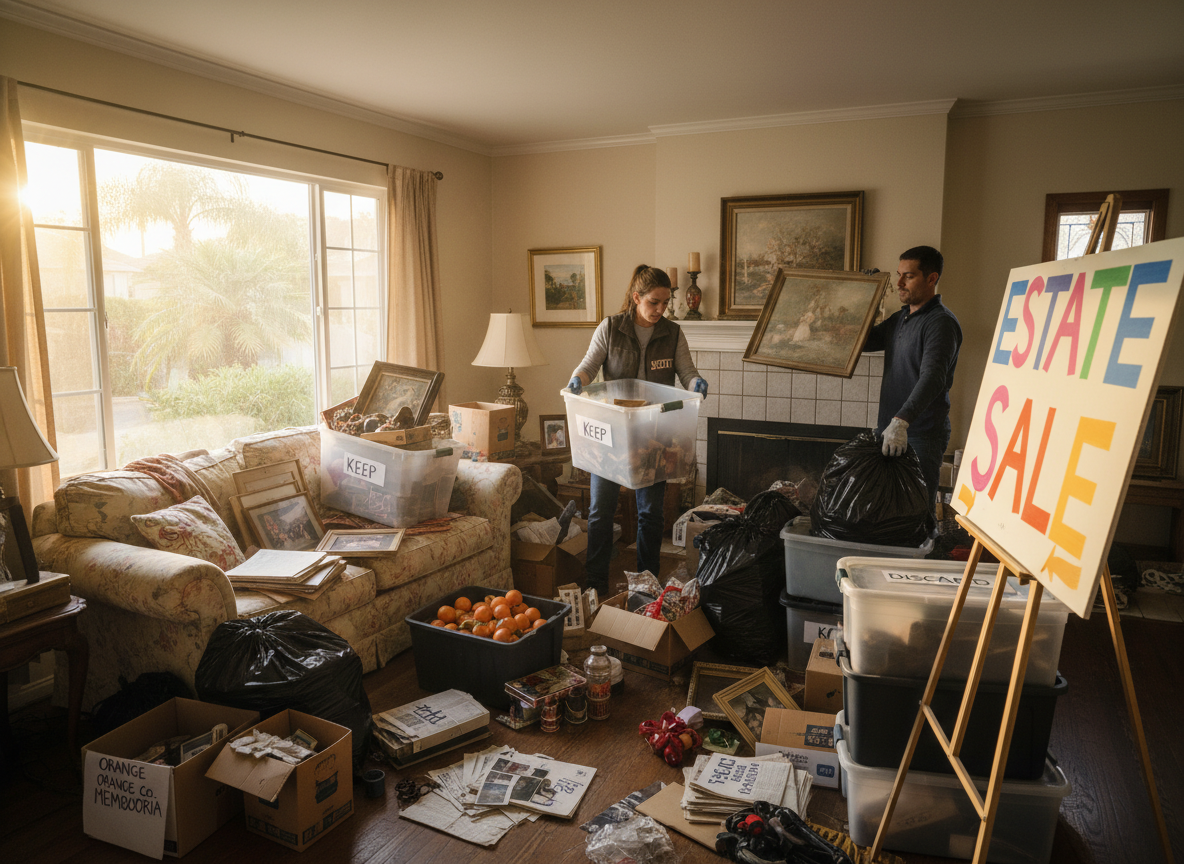
Before hoarding cleanup begins, sort belongings into 6 categories: keep, relocate, sell, donate, recycle and discard. Work in a single 4-by-4-foot zone, photograph valuables before moving them, and stop immediately if you uncover needles, human or animal waste, chemicals, ammunition or unstable piles. This method keeps decisions manageable and prevents important documents, jewelry or estate property from disappearing into trash loads. It also separates ordinary hoarding cleanup from material that may require specialized handling. If you found this guide while searching for “hoeading cleanup,” the essential rule is simple: protect people first, preserve irreplaceable items second and remove obvious waste only after both are under control.
Establish Safe Access Before Sorting
Do not begin by emptying the most crowded room. First establish an unobstructed route from the main entrance to a usable exit, keeping stairs, electrical panels, heaters and cooking appliances accessible. In Orange County ranch homes, attached garages often become the main storage zone, while condos in Anaheim, Costa Mesa and Garden Grove may have tighter hallways, shared stairs and limited staging space. Never shift a tall stack into a common corridor or block a neighbor’s exit.
Use sturdy closed-toe shoes, work gloves and an N95 respirator where dust or droppings are present. Open doors for ventilation only when doing so will not spread loose papers or odors into shared areas. Orange County’s dry inland heat can make garages dangerously hot, and strong Santa Ana winds can scatter papers while increasing fire concerns. Review ways to reduce fire hazards before fall winds before handling material piled around outlets, extension cords or ignition sources.
Set Up 6 Clearly Marked Categories
Use separate containers or staging zones for keep, relocate, sell, donate, recycle and discard. Avoid a general “decide later” pile; it usually becomes another unsorted accumulation. Assign one table or a cleared section of floor to items awaiting review, and limit that space so uncertain decisions cannot overtake the room.
- Keep: Necessary, regularly used or genuinely meaningful property.
- Relocate: Items belonging to relatives, roommates or another estate beneficiary.
- Sell: Complete, identifiable items with realistic resale demand.
- Donate: Clean, functional goods that a recipient can use immediately.
- Recycle: Accepted paper, metal, electronics or containers separated by material.
- Discard: Broken, contaminated, expired or incomplete items with no practical use.
Label every container on the top and at least 1 side. In smaller Santa Ana apartments or condos near central Anaheim, use stackable bins rather than open bags. Readers sorting a unit with shared access may also benefit from this guide to clutter in multi-unit buildings around Anaheim.
Find Documents and Valuables Before Removing Trash
Hoarded rooms often contain important property in ordinary-looking envelopes, grocery bags, coat pockets and product boxes. Before discarding paper, check for identification, property records, tax documents, vehicle titles, insurance papers, military records, photographs and current financial correspondence. Place sensitive papers in a lidded container rather than leaving them exposed for every helper to inspect.
Search methodically instead of guessing where valuables “should” be. Check drawers, purses, shoes, folded linens, freezer containers and small boxes inside larger boxes. Photograph jewelry, coins, cash, collectibles and signed documents where they were found, then record who took custody. For an estate sales clear out, do not assume an old item is valuable merely because it appears antique; condition, maker, completeness and documented history matter. When probate or beneficiary questions are involved, pause distribution and follow the more detailed process for estate cleanouts after probate in Orange County.
Sort Room by Room Without Overhandling Items
Begin with a lower-emotion space, such as a bathroom or laundry area, rather than photographs, clothing or family keepsakes. Complete one shelf, cabinet or 4-by-4-foot zone before moving onward. This creates visible progress and reduces the chance that partly sorted material will spread from the house into the driveway, garage or patio.
Orange County housing requires different staging plans. Older homes around Old Towne Orange and Floral Park may have compact closets, detached garages or narrow side access. Hillside properties in Yorba Linda can add stairs and sloped driveways, while Huntington Beach homes may expose stored metal, paper and fabrics to salt air and coastal moisture. Inspect boxes for softened bottoms before lifting them; transfer contents into sound containers instead of carrying a failing box through the home. Inland garages near Fullerton and Tustin can become extremely warm, so schedule demanding work earlier and avoid leaving batteries, aerosols or electronics in direct sun.
Know What Should Not Enter Ordinary Trash
Stop sorting when material presents a biological, chemical, sharp-object or structural hazard. Do not compress bags by hand or reach into containers you cannot see through. Ordinary junk removal is appropriate for many bulky, nonhazardous items, but it is not a substitute for safe handling of contaminated materials.
Set aside and avoid disturbing:
- Needles, lancets or unidentified sharp objects
- Human or animal waste and heavily contaminated bedding
- Unidentified liquids, pesticides, fuels or leaking containers
- Ammunition, firearms or explosive materials
- Swollen, punctured or heat-damaged batteries
- Mold-damaged materials when growth is extensive or disturbance releases dust
- Piles leaning against doors, windows or weakened shelving
Orange County’s warm periods can intensify odors and accelerate pest activity, while coastal humidity may worsen deterioration inside closed containers. If a ceiling-high pile has shifted or a floor feels soft, leave the area rather than trying to rescue individual items. Safety decisions take priority over recovering replaceable property.
Make Final Decisions and Document the Cleanout
At the end of each session, remove only containers that have a confirmed destination. Keep donation goods clean and usable, separate recyclable materials according to the receiving facility’s rules, and photograph sale items before they leave the property. For estates, maintain a basic log listing the item, category, date and recipient. That record helps family members distinguish sold or transferred property from discarded material.
Set decision limits before starting: for example, retain the best 5 examples from a large group of duplicates rather than reviewing the same category indefinitely. Do not pressure a resident into making rapid sentimental decisions; establish a small, clearly bounded memory container instead. An estate clean out may involve authority, probate or beneficiary concerns beyond physical sorting, so confirm who can approve disposal before loading anything.
Orange County Hoarding Cleanup is available Monday–Friday, 8am–6pm, and Saturday, 9am–2pm. Whether the property is near Disneyland, the Santa Ana Civic Center or the coast in Huntington Beach, a documented category system makes the eventual cleanup safer, clearer and easier to verify.