2026-09-07 ·
Dealing With Clutter in Multi-Unit Buildings Around Anaheim
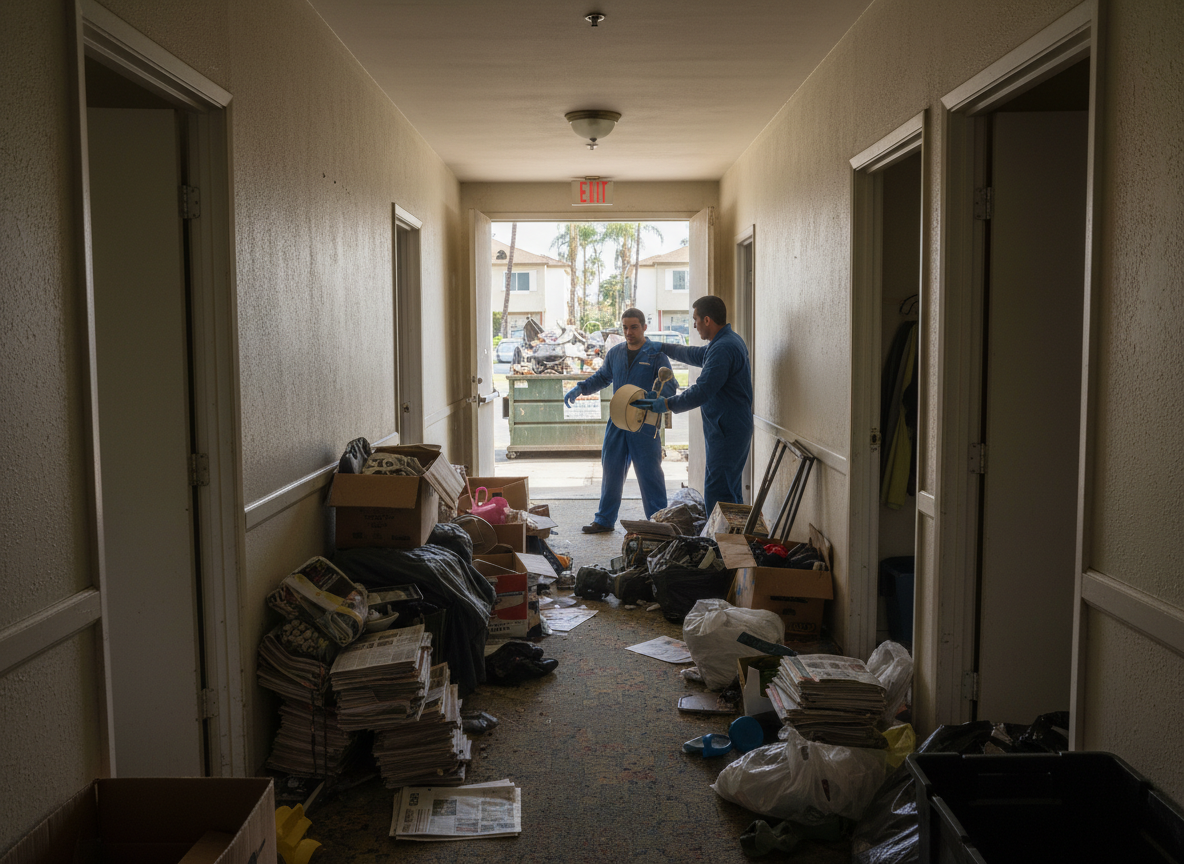
# Dealing With Clutter in Multi-Unit Buildings Around Anaheim
Dealing with clutter in an Anaheim apartment, condominium, or duplex starts with controlling access and protecting shared spaces before anything is removed. The safest sequence is to inspect the unit, identify hazards, reserve the elevator or loading space if applicable, establish a clear exit path, and then sort materials into keep, donate, recycle, document, and discard categories. Multi-unit work differs from a detached-home cleanout because crews may have only 1 usable stairwell, a narrow courtyard, limited parking, and neighbors living a few feet from the work zone. Those restrictions often determine the pace more than the amount of clutter itself.
Start With The Building, Not The Piles
Before opening bags or moving furniture, confirm how materials can legally and safely leave the building. Older courtyard apartments around central Anaheim and the Anaheim Colony may have exterior stairs, tight landings, carports, and gates that do not accommodate large carts. Newer condominium and apartment developments near the Platinum Triangle are more likely to involve elevators, controlled entrances, structured parking, and building-management rules. Properties closer to Anaheim Hills can add sloped drives or longer carries between the unit and the truck.
A useful pre-work check should cover:
- Stair and hallway width, including turns at landings
- Elevator dimensions, operating hours, and reservation requirements
- Parking and loading access for the removal vehicle
- Door, wall, floor, and railing protection along the route
- Fire exits and sprinkler equipment that must remain unobstructed
- Gate codes, keys, and manager contacts needed on cleanup day
For substantial accumulation, a structured Hoarding Cleanup plan helps prevent the common mistake of shifting clutter from the unit into a shared corridor.
Separate Ordinary Clutter From Immediate Hazards
Not every crowded unit is hazardous, but conditions can change once furniture and stacked containers are moved. Look first for blocked exits, unstable piles, spoiled food, sharp objects, medication, animal waste, leaking containers, and signs that plumbing or electrical equipment cannot be reached. Do not compact unidentified liquids, aerosol cans, batteries, fluorescent lamps, or medical sharps into ordinary trash bags. Suspected human waste, blood, needles, or other potentially infectious material should be isolated rather than handled as routine junk; these conditions may require Biohazard Cleanup.
Anaheim’s long dry periods can allow dust and odors to build inside closed units, while winter rain can expose leaks around windows, patios, and roofs. Wet cardboard loses strength quickly and can spread residue across carpet, elevators, and stairs. If moisture has reached stored belongings, place damaged materials in controlled containers before transport instead of dragging soft boxes through the building. The guide to winter rain preparations for hoarded properties explains why exterior drainage and indoor access routes should be checked before storms.
Protect Neighbors And Shared Areas
In a multi-unit building, the cleanup route is also someone else’s route to work, school, parking, or the laundry room. Keep hallways open, avoid propping secured doors without permission, and stage material inside the unit whenever possible. If temporary staging is authorized, use a clearly bounded area that does not block doors, stairs, mailboxes, utility panels, or accessible routes. A worker should monitor the route while bulky items are being carried so residents are not surprised by a sofa or mattress coming around a blind corner.
Noise and odor also need active control. Schedule the loudest dismantling within the property’s permitted work window, close unit doors between trips, and use sealed containers for food waste or heavily soiled material. In elevator buildings, wall pads and floor protection reduce preventable damage, while a final sweep after each load keeps wheels from tracking debris through the lobby. For work specifically coordinated in the city, the Anaheim service area page provides a relevant starting point for planning access and scope.
Sort For Decisions Before Focusing On Disposal
Fast removal is not always the right goal, especially when clutter is connected to a move, probate matter, family transition, or estate sale. Begin with a priority search for identification, property records, keys, photographs, jewelry, cash, tax documents, military records, and current medication. Use clearly labeled containers and designate 1 decision-maker so different relatives or residents do not give conflicting instructions. Items intended for an estate sale should be kept dry, identifiable, and separate from donations and disposal.
A practical sorting sequence is:
- Remove immediate food and sanitation waste.
- Stabilize unsafe stacks and open a clear walking path.
- Search priority zones such as desks, bedside tables, filing cabinets, and locked containers.
- Separate personal records and valuables for review.
- Group sale, donation, recycling, and disposal material.
- Photograph uncertain items before making a final decision.
An Estate Clean Out may include the same physical lifting as clutter removal, but the documentation and decision process is usually more important. An estate-sale clear-out should never begin with indiscriminate bagging.
Build A Cleanup Plan That Can Be Finished
A realistic plan divides the unit into zones and defines what “complete” means for each one. For example, completing the kitchen may mean clearing counters, removing expired food, restoring access to appliances, and leaving cabinets ready for detailed cleaning. Trying to touch every room at once often creates half-sorted piles and makes the unit harder to navigate. Finish 1 path or room before expanding into the next zone, while keeping all exits usable.
The scope should also state whether the work ends at debris removal or includes emptying cabinets, removing furniture, sweeping, and documenting remaining damage. Pricing and duration depend on volume, stairs, elevator access, parking distance, material weight, contamination, and the amount of detailed sorting required; the article on hoarding cleanup cost factors in Orange County neighborhoods explains those variables without reducing the job to a simple room count.
Orange County Hoarding Cleanup is available Mon–Fri, 8am–6pm, and Sat, 9am–2pm. Before scheduling, gather building rules, access details, photographs, and the name of the person authorized to make keep-or-remove decisions.