2026-09-07 ·
Winter Rain Preparations for Hoarded Properties in Orange County
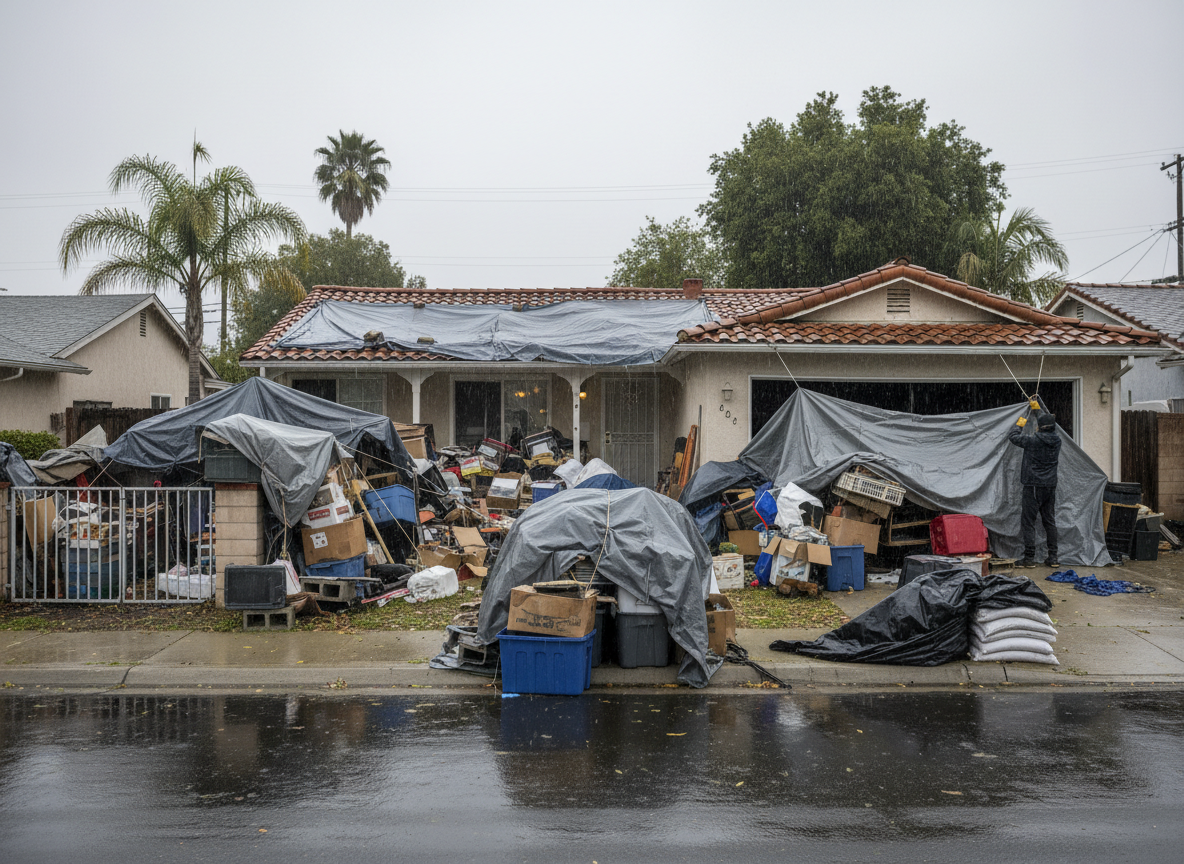
Winter rain preparation for a hoarded Orange County property should begin with 3 priorities: safe access, unrestricted drainage and protection from active leaks. Clear at least 36 inches around the electrical panel, water shutoff and main walking route, then uncover doors, ground-level drains and any interior area below a known roof leak. Do not begin by emptying every room; focus first on preventing rainwater from turning paper, textiles, cardboard and upholstered furniture into heavier contaminated debris. Preparation should happen before the first sustained storm, with another exterior check after each significant rainfall.
Restore Safe Access Before Moving Bulk Debris
A rain inspection is unsafe if stacked belongings block exits or conceal unstable flooring. Establish a continuous route from the main entrance to the kitchen, bathrooms, utility controls and at least 1 alternate exit. In tightly packed Anaheim tract homes, Santa Ana bungalows and older houses near central Orange, narrow halls can become pinch points once wet boxes collapse into the walkway. Condos in Costa Mesa and Huntington Beach present another challenge: debris cannot be staged in shared corridors, stairwells or parking access lanes.
Prioritize these access tasks:
- Remove items from behind doors so each door can open fully.
- Create 36-inch-wide working paths where the room layout permits.
- Keep extension cords, heaters and power strips out of damp floor areas.
- Expose the electrical panel without opening it or touching wet equipment.
- Identify soft, stained or sagging flooring before carrying heavy loads across it.
For severe accumulation, a planned Hoarding Cleanup is safer than shifting unstable piles from room to room. If the building has older wiring, damaged ceilings or an uncertain floor condition, review these safety checks used before cleanup in older homes before work starts.
Clear Exterior Drainage and Inspect Rain Entry Points
Orange County storms can deliver rain faster than a neglected yard or blocked drain can move it away. Start at roof edges, patios, side yards and garage thresholds. Leaves, plastic bags and loose household contents frequently collect at downspouts and area drains, while stored furniture can conceal standing water against stucco or wood siding. Homes near the foothills around Yorba Linda may also receive runoff from sloped lots, while flatter properties in Garden Grove and Westminster can develop ponding where drains are covered by storage.
From the ground, look for overflow stains, separated downspout joints, displaced roof material and vegetation touching the roofline. Never climb onto a wet roof or place a ladder on loose debris. At ground level:
- Remove belongings from drainage channels and downspout outlets.
- Keep soil, bags and containers from forming dams against exterior walls.
- Move absorbent items off balconies and uncovered patios.
- Check garage door corners for daylight, worn seals and old water marks.
- Confirm that discharge water is not being redirected into a neighboring property.
Santiago Creek, the Santa Ana River corridor and low crossings throughout the county are reminders that runoff follows grade. The same principle applies on a residential lot: water needs a clear route away from the str
Protect High-Risk Contents Without Creating New Hazards
Paper records, photographs, medications, legal documents and estate-sale items should be moved before general clutter because even a small leak can destroy them. Use rigid plastic bins with fitted lids for short-term protection, but do not stack loaded bins so high that they become unstable. Cardboard cartons should be kept off concrete garage floors; concrete can remain damp after rain, and boxes quickly wick moisture through the bottom. Leave inspection space between stored contents and exterior walls rather than packing every gap.
Separate belongings into keep, document, donate, dispose and uncertain categories. Photograph valuable or disputed items in place before moving them, especially during an estate sales clear out involving several family members. Avoid sealing anything already damp inside plastic, which can trap moisture and accelerate mold growth. If the property must be emptied for sale or probate administration, an organized Estate Clean Out can preserve decision-making while removing rain-damaged material in a controlled order.
Do not place loose debris at the curb before checking collection requirements. Wind and rain can spread paper, lightweight plastics and contaminated contents into sidewalks or storm drains, creating a larger cleanup problem.
Check Garages, Slabs and Interior Leak Zones
Orange County garages commonly serve as storage rooms, which makes the slab perimeter and garage-door threshold difficult to inspect. Move boxes, rugs and mattresses far enough to check for dampness, mineral residue, peeling base material or staining. Water entering beneath a garage door often travels under stacked contents before becoming visible. In attached garages, inspect the shared wall and the bottom of the door leading into the house.
Inside, check ceilings below roof valleys, plumbing penetrations and upstairs balconies. Brown rings, bubbling paint and sagging drywall indicate more than a cosmetic issue. Do not press, cut or drill into a bulging ceiling; collected water and saturated material can fall without warning. Shut off power to an affected area only if the electrical panel can be reached safely and without standing in water.
Odors also matter. A persistent earthy smell after rain can indicate moisture behind furniture or beneath flooring. If rainwater has contacted animal waste, sewage, decomposed food, needles or other potentially infectious material, ordinary junk handling is not appropriate. Review the scope of Biohazard Cleanup rather than opening contaminated bags or using a household vacuum on dried residue.
Build a Practical Storm Checklist
A workable plan assigns tasks in the order they prevent damage, not according to which room looks worst. Begin 48–72 hours before forecast rain when possible. Walk the exterior in daylight, photograph existing stains and drainage conditions, and note which rooms sit below visible roof trouble. Keep tarps for protecting sorted contents indoors, but do not improvise roof coverings during wind or rain; improperly secured sheeting can damage the roof or become airborne.
Use this final checklist:
- Confirm that 2 exits are reachable and doors operate normally.
- Expose the water shutoff and electrical panel.
- Clear visible drains, downspout outlets and garage thresholds.
- Raise documents and absorbent belongings off slab floors.
- Place buckets only where they will not obstruct walking routes.
- Recheck ceilings, baseboards and exterior walls after the storm.
- Record newly wet materials before disposal for estate or property documentation.
Families sometimes search for “hoeading cleanup” or “estate sales clear out” when the immediate need is actually rain-risk reduction. Whatever term is used, the first objective is the same: stop water entry, preserve safe access and prevent contaminated materials from spreading. Orange County Hoarding Cleanup is available Mon–Fri, 8am–6pm, and Sat, 9am–2pm for cleanup planning in Orange Count