2026-09-07 ·
Safety Checks Before Hoarding Cleanup Begins in Older Irvine Homes
# Safety Checks Before Hoarding Cleanup Begins in Older Irvine Homes
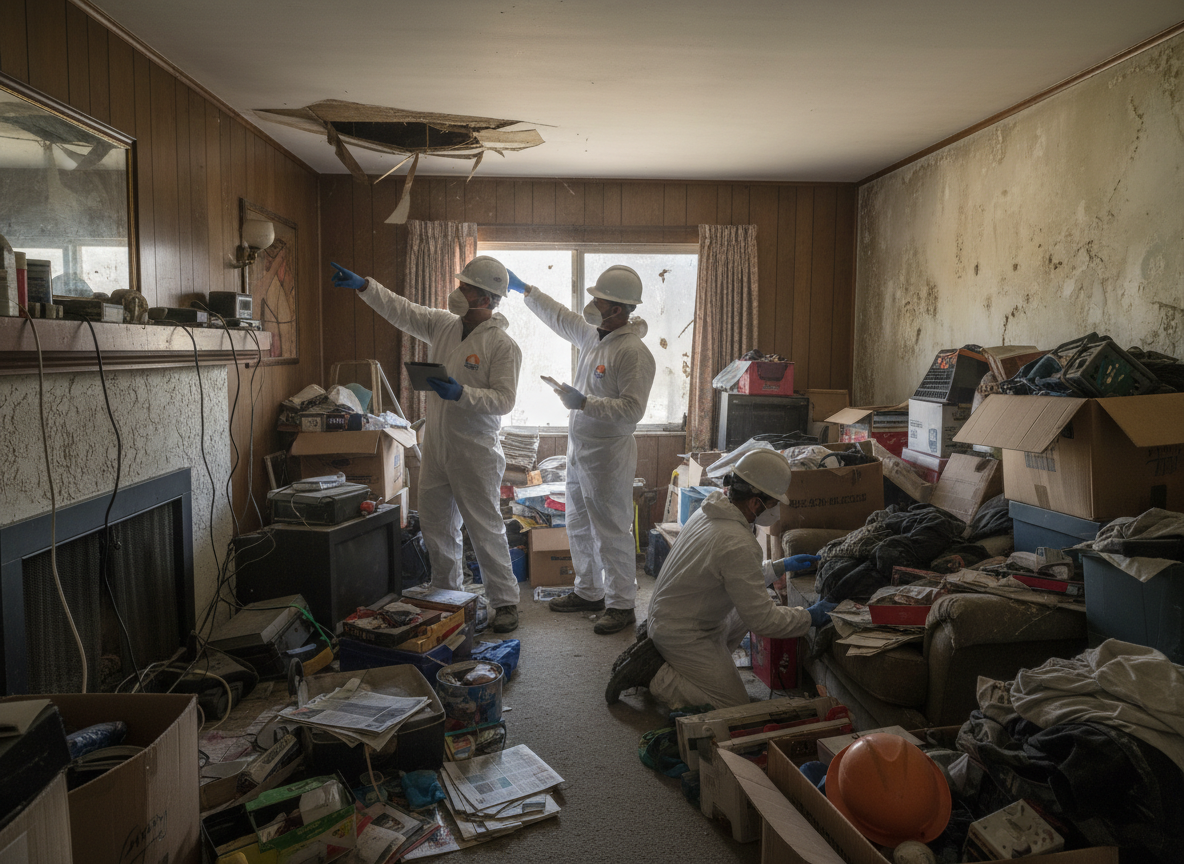
Before hoarding cleanup begins in an older Irvine home, check structural stability, electrical and gas service, water damage, fire hazards, pests, hazardous materials and emergency access. No one should start shifting piles until there is at least 1 safe entrance, 1 dependable exit and a clear route to the electrical panel, gas shutoff and main water valve. Moving the wrong stack can expose damaged wiring, release contaminated dust or destabilize materials that have been leaning against cabinets and walls. A deliberate inspection protects occupants, cleanup workers and any personal property that may need to be preserved.
Start With The Exterior And Entry Route
The first inspection happens before entering. In established Irvine neighborhoods such as University Park, Woodbridge, Northwood and El Camino Real, attached garages, narrow side yards and interior courtyards can restrict how debris leaves the property. Inspect the driveway, garage threshold, gates, exterior steps and walkways for unstable loads, broken concrete, leaking containers or objects blocking doors. A garage packed to the ceiling should not automatically become the removal route; overhead storage, damaged door tracks and hidden fuel containers can make it more hazardous than the front entry.
Choose an entry route that can support repeated foot traffic and carts without forcing workers under leaning stacks. Keep keys available for every accessible exterior door, and confirm that security bars, deadbolts or stored furniture will not trap someone inside. When dry vegetation or windblown debris has accumulated against the structure, review the precautions in reducing fire hazards before fall winds before staging discarded material outdoors.
Check Floors, Ceilings And Load-Bearing Areas
Older Irvine houses often have slab-on-grade living areas, but raised entries, stairways, balconies and second floors still require close attention. Dense collections of books, paper, canned goods or furniture place far more concentrated weight on a floor than loosely packed clothing. Warning signs include sloping floors, cracked tile, separated baseboards, soft areas near bathrooms, sagging ceilings and doors that no longer close normally.
Do not pull supporting items from the bottom of a pile. Reduce tall stacks from the top while standing outside their fall path, and stop if a wall, cabinet or ceiling surface begins to move. Water staining beneath an upstairs bathroom or around a roof penetration may indicate weakened drywall or framing hidden behind stored property. A professional hoarding cleanup plan should divide the home into controlled work zones so damaged rooms are not crossed simply because they offer the shortest path to a dumpster or truck.
Inspect Electricity, Gas And Water Before Disturbing Piles
Utility hazards become harder to see when extension cords, lamps and appliances disappear under belongings. Locate the electrical panel without stepping over unstable material, then look for warm outlets, scorched plugs, buzzing, exposed conductors or multiple power strips connected in sequence. Do not energize an unplugged appliance merely to test it. If water has reached wiring or the panel is inaccessible, pause work until the hazard can be evaluated by the appropriate trade professional.
Find the gas shutoff and check around water heaters, furnaces, dryers and cooking appliances for crushed connectors or blocked ventilation. A noticeable gas odor requires immediate evacuation; avoid switches, phones and anything that could create a spark while inside. Also locate the main water valve before moving items around toilets, sinks or laundry hookups. Irvine’s long dry periods can conceal slow plumbing leaks because surface moisture evaporates while cabinets, drywall and stored paper continue deteriorating underneath.
Screen For Fire, Biological And Chemical Hazards
Paper, textiles and plastic containers can create continuous fuel paths from room to room. Confirm that at least 2 routes are not simultaneously blocked, and keep hallways, bedroom doors and heat-producing equipment free from loose material. Space heaters, overloaded receptacles, candles and cooking surfaces require special attention because a small ignition can spread quickly through tightly packed contents.
The initial screening should also identify conditions beyond ordinary clutter removal:
- Animal or human waste, used needles, blood or decomposing material
- Rodent droppings, nesting material, fleas or aggressive insects
- Unlabeled chemicals, pesticides, solvents, fuels or leaking batteries
- Swollen food cans, spoiled refrigerators and containers under pressure
- Suspected asbestos-containing material or deteriorated lead-painted surfaces
- Mold growth associated with roof, plumbing or appliance leaks
Do not sweep or use a household vacuum on droppings or contaminated dust. Dry disturbance can send particles into the breathing zone and distribute them through adjacent rooms or an operating HVAC system.
Protect Documents And Estate Property
A safety-first cleanout is not the same as throwing everything away. Older Irvine homes may contain property records, tax documents, family photographs, jewelry, keys, medication and financial information mixed into newspapers or ordinary household containers. Establish keep, review, donate, recycle and discard zones before removal begins, but place those zones outside active trip paths and away from contaminated rooms.
For an estate sales clear out, identify who has authority to make decisions before opening drawers, moving locked containers or releasing items. Documents connected to probate, trusts, real estate or taxes should go into a dedicated review container rather than a general paper-recycling pile. The guide to managing estate cleanouts after probate explains why authorization and documentation matter. Photograph significant rooms and questionable items before changing their position; the goal is an orderly record, not an unnecessary inventory of every object.
Build A Safe Cleanup Sequence
Once hazards are documented, plan the work in a sequence that prevents clean zones from becoming contaminated again. Begin by establishing ventilation only when opening windows will not spread dust, disturb insects or interfere with containment. Clear a stable route, isolate hazardous rooms, remove immediate ignition sources and then sort material in manageable sections. Heavy furniture and appliances should wait until pathways are wide enough for controlled lifting and the destination is ready.
Arrange disposal by material type rather than loading everything together. Paint, chemicals, electronics, batteries and other restricted items may require different handling from ordinary household debris; Orange County waste disposal rules for large cleanouts provide useful next-step context. Recheck the home at the end of each work period for blocked exits, exposed sharp objects, running water and energized equipment. Orange County Hoarding Cleanup is available Monday–Friday, 8am–6pm, and Saturday, 9am–2pm, when an Irvine property needs a structured assessment before cleanup or estate removal begins.