2026-09-07 ·
Reducing Fire Hazards in Hoarded Homes Before Fall Winds
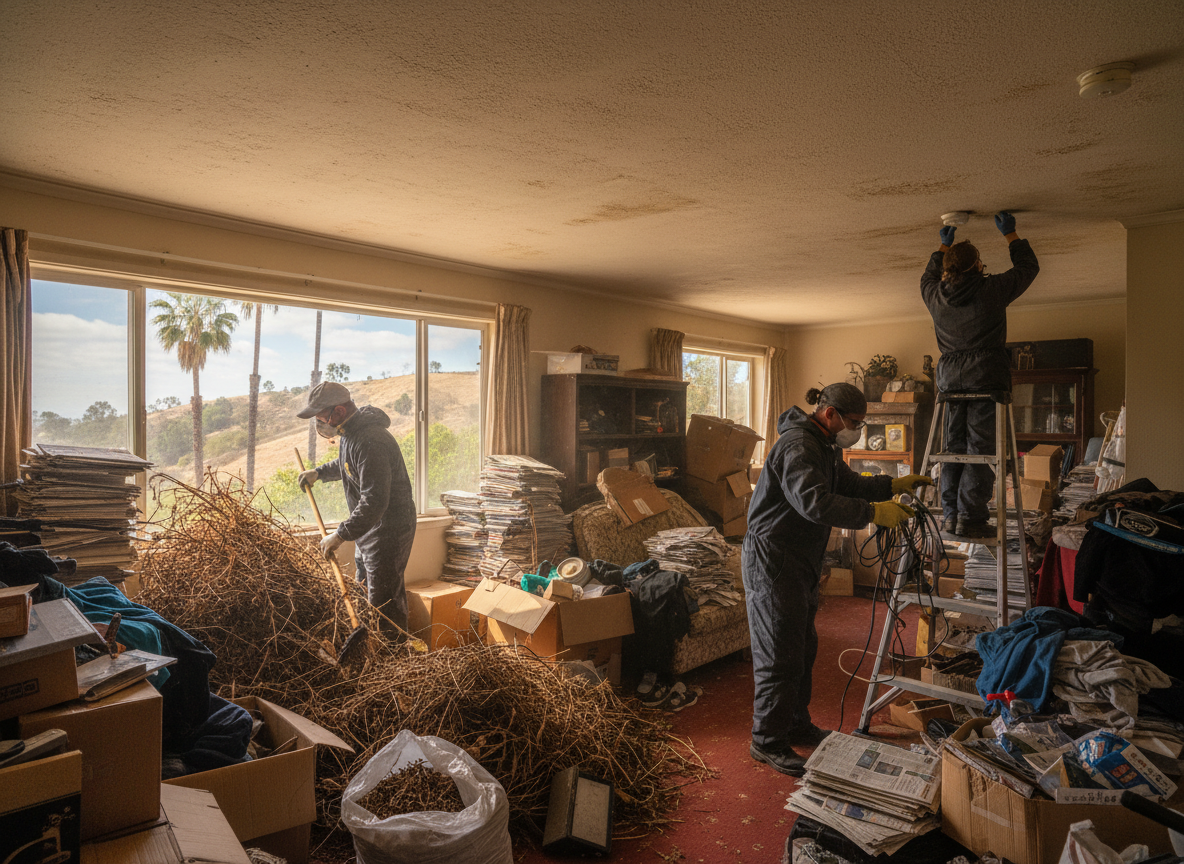
Reducing fire hazards in a hoarded home before fall winds starts with 3 priorities: maintain 2 usable exits, create 36 inches of clearance around heat-producing equipment, and open a continuous path from occupied rooms to the street. Do not begin by emptying closets or shifting everything into the garage; that can block another exit and concentrate combustible material beside vehicles, water heaters or electrical equipment. In Orange County, dry vegetation and strong Santa Ana winds can accelerate fire spread, particularly near hillside and canyon communities. The immediate objective is not a perfectly cleared property. It is a safer structure that occupants can leave quickly and firefighters can approach without climbing over unstable piles.
Establish Escape Routes Before Sorting Possessions
Walk the home as if smoke has already reduced visibility. Starting at every bedroom and commonly occupied room, identify a primary route to an exterior door and a second route when the layout permits. Keep each route at least 36 inches wide, remove trip hazards from the floor, and make sure doors and windows used for escape open without moving boxes first. Never build piles along stair rails, at the top of steps or in narrow hallways; a small collapse can cut off the only route from an upstairs room.
Orange County housing varies from compact apartments in Santa Ana to mid-century ranch homes in Anaheim, Orange and Fullerton and hillside properties around Yorba Linda. Each layout creates different problems. Apartments may have only 1 practical exterior exit, while attached garages in suburban homes often become overloaded secondary storage rooms. Hillside driveways and gated side yards can also slow emergency access. Mark cleared paths with bright tape if belongings are likely to migrate back, and keep keys immediately available for locked security doors.
Remove Fuel From Ignition Sources
Combustible clutter becomes most dangerous when it touches or surrounds something that generates heat, sparks or flame. Paper, textiles and cardboard should be moved at least 36 inches from water heaters, furnaces, portable heaters, cooking appliances and electrical panels. Maintain enough open space at the electrical panel for an adult to reach it without leaning across a pile. Do not place removed items on patios against exterior walls, under eaves or beside wooden fences; wind-blown embers can ignite those temporary stacks.
Prioritize these conditions during a first pass:
- Extension cords beneath rugs or boxes, especially cords that feel warm, look crushed or have damaged insulation.
- Power strips connected to other power strips, which can overload a circuit.
- Items resting on stovetops, even when burners are rarely used.
- Blocked HVAC vents or appliances covered by fabric and paper.
- Oily rags, fuels, solvents or aerosols stored near ignition sources.
- Lithium-ion batteries that are swollen, punctured, unusually hot or mixed loose into clutter.
If outlets are scorched, wiring is exposed or a panel is buzzing, stop work in that zone and have the electrical hazard evaluated. A structured hoarding cleanup should separate obvious combustibles, electronics, chemicals and ordi
Protect Firefighter Access And The Home’s Exterior
Fall wind preparation must continue beyond the front door. Clear the address so it is visible from the street, keep the walkway and driveway passable, and remove stored belongings from around gates. Fire crews need room to move equipment, while occupants need a route that does not end at an obstructed porch. In canyon-facing and foothill parts of Orange County, including areas near the Santa Ana Mountains, wind can carry embers ahead of a fire front. Coastal communities such as Huntington Beach and Costa Mesa may experience more moisture and salt exposure, but exterior cardboard, dry textiles and overloaded patios still create avoidable fuel.
Inspect the edges of the structure rather than attempting broad landscape work without a plan. Remove dry leaves and loose debris trapped against walls, beneath exterior stairs and around decks. Keep stored material away from vents, eaves and exterior utility equipment. Do not block fire hydrants, shared driveways or apartment corridors with bags awaiting disposal. For a large volume of material, review Orange County cleanout disposal rules before placing containers or arranging loads; hazardous products, electronics and ordinary trash may require different handling.
Sequence The Cleanup Without Making Conditions Worse
Use a controlled sequence: photograph the room, identify hazards, open the path, remove ignition-adjacent material, and only then sort lower-priority contents. Work from the exit inward so nobody becomes boxed into a room. Keep each bag or container light enough to carry safely, and never pull from the bottom of a leaning stack. Tall piles can conceal broken glass, needles, pests, spoiled food or weakened flooring. If human waste, significant animal waste, blood or decomposition is present, ordinary clutter handling is not appropriate; the affected area may require biohazard cleanup.
A practical staging system uses clearly separated zones for keep, dispose, donate and special handling, but those zones must not occupy exits or the garage’s water-heater area. Estate contents may also include documents, photographs, jewelry or property records that should be isolated before removal. Families coordinating a sale or inherited property can use the same fire-first sequence before a broader estate clean out. The goal before the winds is to correct urgent hazards, not force permanent decisions about every possession under pressure.
Complete A Final Fire-Safety Walkthrough
Finish by walking every escape route without turning sideways, stepping over objects or moving a container. Test that exterior doors open, confirm windows intended for escape are not blocked, and look upward for material stacked close to light fixtures. Verify that smoke and carbon monoxide alarms are present and operational according to their manufacturer instructions; replace damaged or expired units rather than assuming an alarm buried behind clutter will function effectively. Keep mobility devices, medications, shoes and keys where occupants can reach them quickly.
Then stand at the curb and assess the property from an emergency responder’s perspective. The address should be readable, the entrance obvious and the route to the door clear. Recheck patios, garages and side yards after disposal bags are moved because temporary staging often recreates the same obstruction outdoors. If the home cannot be cleared safely without disturbing unstable piles, contaminated materials or damaged wiring, pause rather than improvising. Orange County Hoarding Cleanup is available Mon–Fri, 8am–6pm, and Sat, 9am–2pm for cleanup planning, but occupants should call emergency services immediately when there is active smoke, fire, sparking equipment or an immediate threat to life.