2026-09-07 ·
Donating Items From Estate Cleanouts in Santa Ana
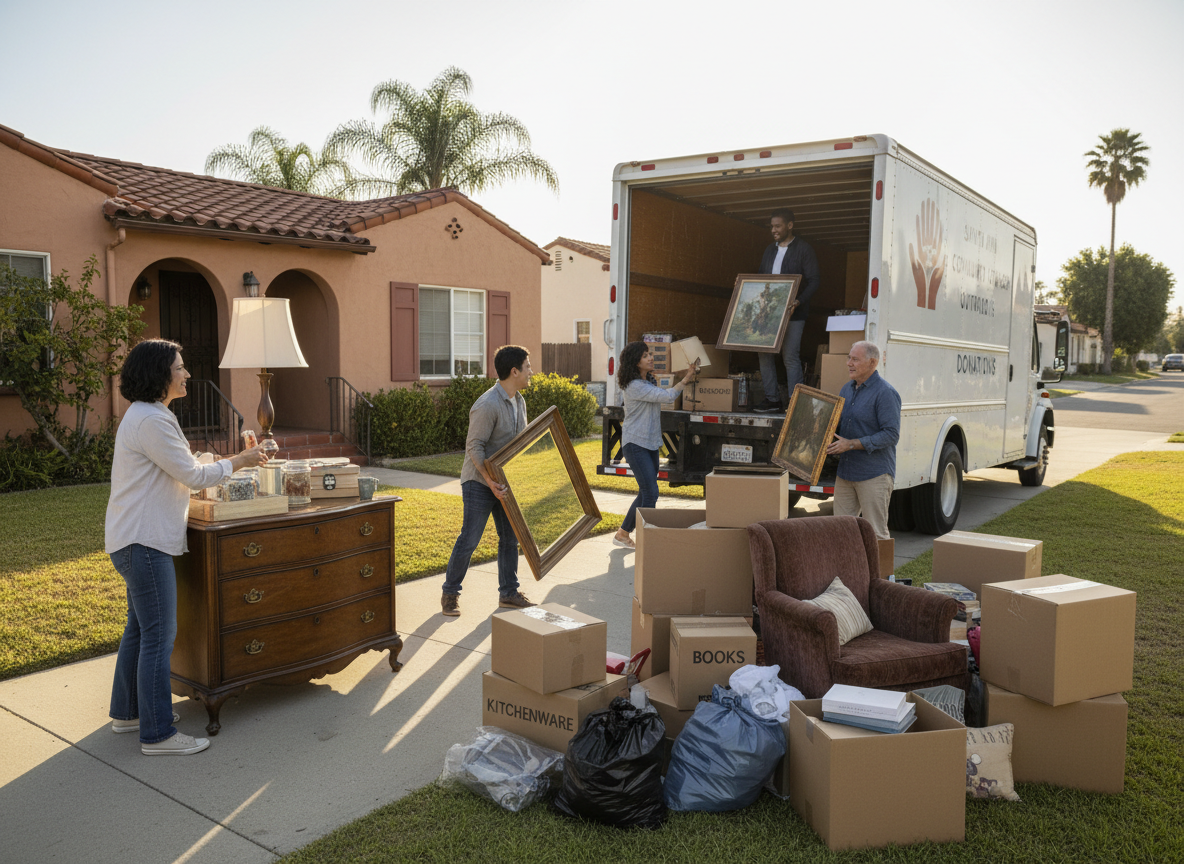
Most usable items from a Santa Ana estate cleanout can be donated, but they should be clean, complete, safe, and separated by destination before anything is loaded. Start with clothing, kitchenware, working electronics, small furniture, books, and unopened household supplies; hold back stained upholstery, damaged particleboard, recalled products, and anything exposed to pests or bodily fluids. Confirm each organization’s current acceptance rules before driving over because donation needs, drop-off hours, and pickup availability can change. This planned approach keeps valuable goods out of the disposal stream without allowing donation decisions to stall the entire cleanout.
Sort For Donation Before The Estate Sale Clear Out
Donation sorting should happen before the final estate sales clear out, not after sale leftovers have been mixed with trash and hauling piles. In Santa Ana homes, garages and spare rooms often contain several generations of belongings, including duplicates that are useful even when they have little resale value. Establish separate zones for keep, sell, donate, recycle, and dispose, then label them clearly so family members and workers do not move items back into the wrong pile.
Use a practical first-pass checklist:
- Open boxes and inspect every layer rather than trusting old labels.
- Check drawers, coat pockets, books, and luggage for cash, documents, jewelry, or photographs.
- Keep matching hardware with bed frames, shelving, and tables in sealed bags.
- Test lamps and small appliances with safe cords and intact plugs.
- Place dishes and glassware in sturdy cartons rather than overloaded plastic bags.
For crowded rooms or blocked exits, a structured hoarding cleanup may be safer than trying to sort from the center of the accumulation. People searching for “hoeading cleanup” often need this same controlled, room-by-room process.
Decide What Santa Ana Donation Centers Can Realistically Use
A donation is helpful only when the recipient can safely handle and redistribute it. Goodwill of Orange County, The Salvation Army, and Habitat for Humanity of Orange County ReStore are recognizable starting points, but they serve different purposes and do not necessarily accept the same merchandise. Check the organization’s official guidance and call about bulky or unusual items before loading a truck. A usable dining table may still be refused because of condition, size, current inventory, or pickup constraints.
Items commonly worth asking about include clean clothing, boxed housewares, functional lamps, tools, books, framed décor, and solid furniture. Photograph large pieces from several angles and record their width, depth, and height. Disclose scratches, missing shelves, pet exposure, smoke odor, or other defects instead of expecting donation staff to discover them at unloading.
Santa Ana is surrounded by Orange, Tustin, Garden Grove, Costa Mesa, and Anaheim, so the nearest suitable destination may be outside the city. Do not assume that one rejected load belongs in the trash; another organization may have a different mission, provided the item remains safe and genuinely reusable.
Account For Santa Ana Homes, Access, And Weather
The condition of a donation often changes between the room and the truck. Santa Ana includes older detached homes around Floral Park and French Park, compact properties near Downtown and the Civic Center, apartments, and denser neighborhoods such as Delhi. Narrow driveways, detached garages, upstairs units, alley access, and limited curb space can make oversized furniture difficult to remove without wall, railing, or floor damage. Measure doorways and the item itself before committing it to donation.
Orange County’s generally dry conditions can hide storage damage until boxes are opened. Garages may expose paper, fabric, and wood to heat and dust, while winter rain can reach items stored near an unsealed door or roof leak. During hot, dry periods and Santa Ana wind events, avoid leaving cardboard, textiles, or loose packing materials outside where they can become a fire or blowing-debris hazard. The guide to reducing fire hazards in hoarded homes before fall winds explains why clear exits and controlled staging matter. Use covered vehicles and keep donations off damp pavement during loading.
Protect Documents, Memories, And Sensitive Property
Fast donation sorting can accidentally send away the items a family can never replace. Before boxing books, desks, filing cabinets, handbags, or clothing, inspect hidden compartments and every sheet of paper. Estate paperwork is frequently mixed with ordinary mail, greeting cards, appliance manuals, and newspaper clippings, so judging an entire box by the top layer is risky.
Set aside these categories for direct family review:
- Wills, trusts, deeds, tax records, and insurance papers
- Passports, birth certificates, military records, and identification
- Checkbooks, account statements, keys, and vehicle documents
- Photographs, handwritten recipes, letters, and labeled keepsakes
- Prescription medication, firearms, ammunition, and potentially hazardous materials
Do not donate computers or phones until personal data has been properly removed. Factory-resetting a device may be appropriate, but accounts, removable storage, and saved browser information also require attention. Medication, chemicals, sharps, and contaminated belongings need separate handling rather than placement in a donation box. When an estate includes blood, needles, heavy animal waste, or similar exposure, review professional biohazard cleanup options before ordinary sorting continues.
Plan Loading, Receipts, And Final Disposal
Group donations by recipient and load them in reverse drop-off order. Put heavy cartons on the bottom, protect furniture edges with moving blankets, and keep bags of clothing away from liquids or cleaning products. Maintain a written inventory and take photographs before handoff. Donation receipts can document what an organization received, but the donor is responsible for retaining appropriate records and obtaining tax advice when valuation matters.
Build a fallback plan for items that are declined. Reusable metal, electronics, cardboard, household hazardous waste, and ordinary bulky trash can follow different Orange County disposal paths; they should not be combined simply to finish faster. Review Orange County rules for large-cleanout waste before arranging the final load, or use an organized estate clean out when sorting, lifting, and removal need to be coordinated together.
The practical goal is not to donate everything. It is to identify useful property early, preserve its condition, and deliver it only where it has been confirmed as acceptable. Orange County Hoarding Cleanup serves the Orange County area and is available Mon–Fri, 8am–6pm, and Sat, 9am–2pm for cleanout planning questions.